


.png)
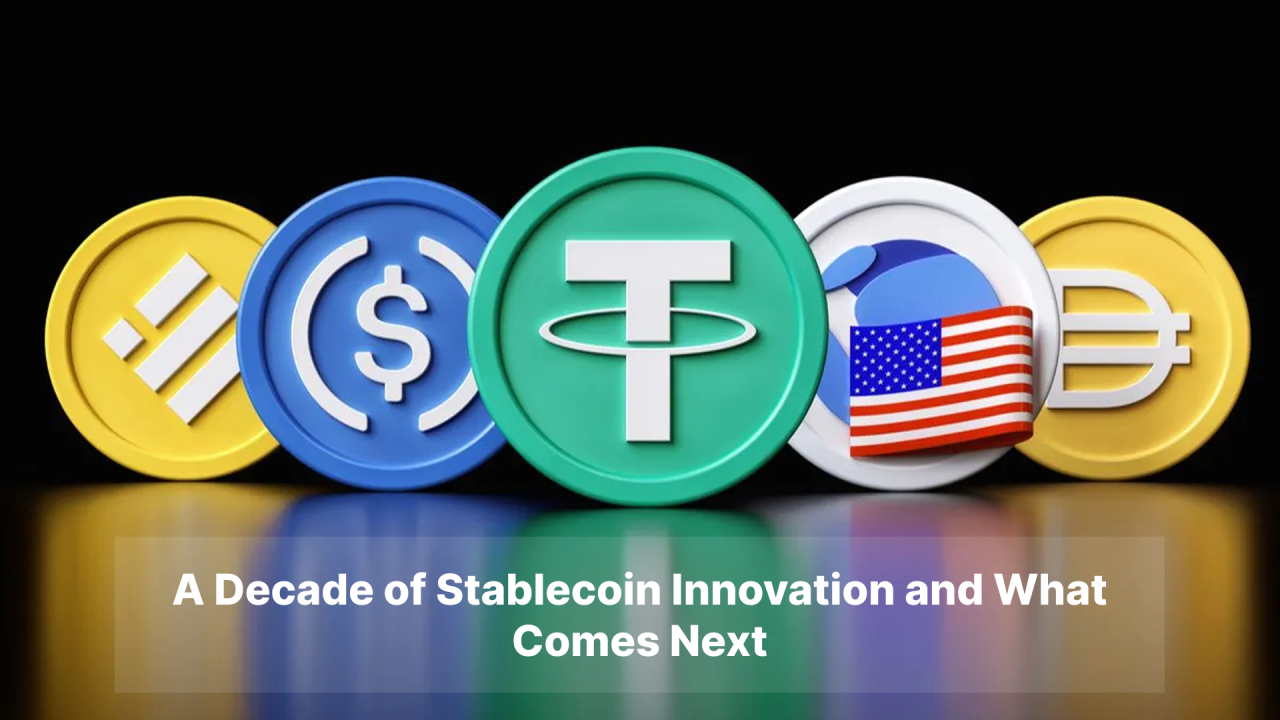
Stablecoins have evolved from experimental crypto-collateralized assets to institutional-grade infrastructure underpinning a new wave of global finance. From the early days of BitUSD and Tether, to the introduction of DAI's decentralized model and the rise and fall of Terra's UST, stablecoins have undergone massive shifts. Today, fiat-backed coins like USDC and PYUSD dominate usage, while interest-bearing models like USDY and USDS explore new frontiers in on-chain yield. Recent moves by Stripe and MoonPay to acquire stablecoin rails infrastructure, along with Circle's launch of a new payment network signal a very clear shift: stablecoins are no longer a fringe innovation. They are becoming a foundational bridge between traditional and decentralized finance.
The Cornerstone of Crypto
Stablecoins have become a cornerstone of crypto markets, bridging the volatility of cryptocurrencies with the stability of fiat currencies. As of April 2025, the total market capitalization of stablecoins exceed
s $236 billion, with leading tokens such as USDT and USDC commanding the majority share (~88% combined). Monthly transfer volumes have surpassed $4 trillion, underscoring their critical role in on-chain liquidity and cross-border transactions.
Analysts project that the stablecoin market could reach over $2 trillion billion by 2028, driven by institutional adoption, tokenized assets, and emerging real-world assets (RWAs) use cases. Their evolution reflects a broader narrative about trust, decentralization, and financial experimentation on blockchains.
This growing relevance is reflected in venture activity as well. In its Winter 25' batch, Y Combinator issued a call for proposals specifically focused on stablecoin finance, highlighting the growing interest in building foundational financial services on stablecoin rails. In this post, we explore the history of stablecoins, from early algorithmic concepts to today's dominant models.
🧪 Early Experiments and First Stablecoins: BitUSD and Tether
The journey began in 2014 with the creation of BitUSD on the BitShares blockchain. It was the first attempt at a decentralized, crypto-collateralized stablecoin, relying on a mechanism called 'SmartCoins.' These tokens were backed by BitShares (BTS) collateral and maintained a peg through an on-chain price feed and automatic margin calls. If the value of the collateral fell below a set threshold, the system would automatically liquidate the position to protect the peg, making it an early experiment in algorithmic collateral management.
Later that year, Tether (USDT) was launched, pioneering the fiat-backed model. USDT quickly became the dominant stablecoin due to its simplicity and utility in exchanges, despite controversies over reserve transparency.
🧠 Algorithmic vs Collateralized Innovation: Basecoin and MakerDAO (2017)
In 2017, two pioneering projects presented contrasting approaches to the stablecoin challenge. Basecoin (later Basis) introduced an algorithmic model inspired by central bank economics. It used a three-token system—Basecoin (the stablecoin), bonds, and shares—to expand or contract supply algorithmically based on market demand. The key concept was seigniorage shares, allowing the system to issue or burn Basecoin to maintain its peg. Despite raising over $130 million, regulatory pressures led to its closure in 2018.
In the same year, MakerDAO launched with a radically different approach: DAI, a decentralized stablecoin backed by on-chain collateral (initially only ETH). Governed by a Decentralized Autonomous Organization (DAO), DAI relied on overcollateralization and market incentives to maintain its stability. Maker's model emphasized transparency, composability, and decentralized governance, eventually evolving into a multi-collateral system that became central to the DeFi ecosystem.
While Basecoin sought stability through algorithmic expansion and contraction, MakerDAO anchored it through secured, decentralized collateral. These models represented the early divergence between algorithmic and collateral-backed philosophies in stablecoin design.
💵 The Fiat-Backed Dominance: USDC (2018)
USDC, initially launched by Circle and Coinbase in 2018, gained favor for its regulated structure and transparent reserves. It introduced a new standard for accountability in stablecoin design, publishing monthly attestations from independent auditors verifying that each USDC token in circulation is fully backed by equivalent fiat reserves held in regulated financial institutions. This approach contrasted sharply with earlier models like USDT, which faced scrutiny for opacity regarding their reserve composition.
This approach resonated with institutional players and regulators alike, positioning USDC as the stablecoin of choice for enterprises and developers prioritizing compliance and clarity. It helped catalyze adoption by exchanges, fintech platforms, and payment providers, solidifying its role in DeFi, remittances, and business payments.
🧠 Algorithmic Innovations: Terra USD (UST) and the Collapse (2020–2022)
In 2020, Terra USD (UST) was introduced by Terraform Labs as part of the broader Terra blockchain ecosystem. Unlike collateralized stablecoins, UST used an algorithmic dual-token system with LUNA, the native staking and governance token. The protocol maintained UST's dollar peg through a mint-and-burn mechanism: users could mint 1 UST by burning $1 worth of LUNA, and vice versa. This arbitrage model incentivized users to stabilize UST's price by capitalizing on deviations from its peg.
This system worked under normal market conditions, and UST gained rapid adoption, particularly within the Terra DeFi ecosystem—such as the Anchor Protocol, which offered unsustainably high yields (up to 20%) on UST deposits. These incentives drove massive demand for UST, inflating its market cap to nearly $18 billion by early 2022.
However, the structure depended heavily on constant demand and faith in LUNA's value. In May 2022, confidence began to erode, triggering large-scale redemptions. As users rushed to convert UST to LUNA, the supply of LUNA ballooned and its price collapsed, undermining the entire peg mechanism. This death spiral led to both UST and LUNA becoming nearly worthless, wiping out billions in value and sending shockwaves through the crypto industry. The event served as a stark warning about the fragility of algorithmic stablecoins lacking robust collateral backing.
🌍 Non-USD Stablecoins: EURC, EURCV, EURT, BRZ, and BRLA (2022–2025)
Starting in 2022, EURC, launched by Circle, introduced a compliant euro-pegged stablecoin to the market, aiming to bring the same transparency and regulatory rigor of USDC to euro-denominated digital payments. It was soon joined by EURCV from Société Générale—one of the first stablecoins issued by a major traditional bank—and EURT from Tether, which took a more market-driven approach, catering to a broader, retail-focused audience.
In Brazil, BRZ and BRLA emerged to meet growing demand for real-denominated digital assets, extending stablecoin use into regional economies and supporting cross-border remittances, international trading, and DeFi participation.
Fun fact: BRZ became the most traded Brazilian digital asset on global crypto exchanges, highlighting how local currency stablecoins can bridge global liquidity with domestic financial systems—especially in emerging markets where currency volatility and financial exclusion are more acute.
🏛️ CBDCs and Regulatory Frameworks: A New Phase for Stablecoins (2023–2025)
Central banks are increasingly developing both alternatives to and complements for private stablecoins. The European Central Bank is currently in the preparation phase of the digital euro, slated for potential implementation between 2025 and 2026. Meanwhile, regulatory frameworks like the EU’s MiCA (Markets in Crypto-Assets) regulation are bringing long-awaited clarity—defining stablecoin classifications and imposing proportionate requirements on startups and Crypto Asset Service Providers (CASPs).
Together, these efforts signal a broader institutional embrace of digital assets, grounded in transparency, control, and compliance. They not only underscore the strategic imperatives of monetary sovereignty and financial stability in a landscape increasingly influenced by private digital currencies, but also set a global precedent for cohesive regulatory coordination.
📉 Interest-Bearing Stablecoins and Savings Coins
A recent evolution in the stablecoin ecosystem has been brought on by interest-bearing stablecoins, also referred to as savings coins. These assets allow users to earn yield simply by holding them, typically through mechanisms that pass through returns from underlying reserve assets such as government bonds or money market funds.
While this model has garnered attention for its potential to bridge traditional finance with on-chain utility, it also introduces regulatory complexity. Notably, interest-bearing stablecoins were excluded from the scope of the EU’s MiCA regulation, leaving such instruments in a gray area. This gap has already led to tangible market consequences. In January 2023, e-Money announced the wind-down of its stablecoins, including the EEUR token, an interest-bearing euro stablecoin, citing lack of regulatory clarity and the 2022 crypto market crash as key reasons for halting operations.
The EEUR case illustrates both the innovation and the fragility of interest-bearing models in the absence of comprehensive legal frameworks. However, more robust and effective approaches are emerging:
- USDY by Ondo Finance is a tokenized note backed by short-term U.S. Treasury bills and bank deposits. It offers holders a variable yield, starting at an annual percentage yield (APY) of 5%, and is over-collateralized to absorb short-term volatility in U.S. Treasury prices. USDY is not available to U.S. persons and is designed to provide accessibility similar to stablecoins while offering real-world yields.
- sUSDS by Sky Protocol (formerly MakerDAO) is a decentralized stablecoin that allows users to earn yield through the Sky Savings Rate (SSR). By depositing the USDS dollar stablecoin, users receive Savings USDS (sUSDS), which appreciates over time based on the SSR. The SSR is determined by ecosystem governance and is funded by lending fees and liquidation penalties within the protocol. This model aims to balance transparency, decentralization, and stable returns.
As regulators continue to refine classifications, these next-generation savings coins highlight the potential for innovation that blends yield with programmability and trust. Moreover, their design may offer potential tax efficiencies in jurisdictions like Germany, where a one-year holding period can make gains from certain interest-bearing assets tax-free if structured correctly.
🔮 Beyond Today: Interoperability, Institutional Integration, and Programmable Money (2024–2025)
The stablecoin ecosystem is rapidly evolving, marked by significant strides in integrating traditional finance (TradFi) with decentralized finance (DeFi). Recent strategic acquisitions and infrastructure developments highlight this convergence:
- Stripe’s Acquisition of Bridge: In October 2024, Stripe completed its largest acquisition to date by purchasing the stablecoin platform Bridge for $1.1 billion. This move signifies Stripe’s commitment to embedding stablecoin capabilities into its global payment infrastructure, aiming to facilitate seamless, cross-border transactions.
- MoonPay’s Acquisition of Iron: In March 2025, MoonPay acquired Iron, a stablecoin infrastructure firm, for over $100 million. This acquisition positions MoonPay to offer enterprise-grade stablecoin solutions, enabling instant, programmable payments for businesses worldwide.
- Circle’s Launch of the Circle Payments Network (CPN): In April 2025, Circle unveiled the CPN, a global payments and remittance network leveraging USDC and EURC stablecoins. The network aims to provide real-time, low-cost, and transparent settlement of international transactions, collaborating with major banks and financial institutions to modernize cross-border payments.
These developments underscore the growing role of stablecoins as foundational elements in the global financial infrastructure, bridging the gap between traditional banking systems and the emerging decentralized economy.
At the ecosystem level:
- EURC gained early traction as a euro-backed stablecoin with a clear regulatory path under MiCA.
- PYUSD, introduced by PayPal and issued by Paxos in 2023, marked a landmark moment for institutional adoption, leveraging PayPal’s massive distribution.
- GHO, launched by Aave, leverages protocol-governed issuance backed by decentralized collateral.
- USDS, launched in 2024 by Sky Protocol (formerly MakerDAO), integrates real-world asset exposure and savings mechanics.
- M0, a programmable issuance layer launched in 2024, is building infrastructure for compliant and modular stablecoin issuance.
Together, these developments highlight how stablecoins are no longer just instruments of price stability but have evolved into programmable financial primitives enabling the next generation of commerce, credit, and capital allocation.
📌 Conclusion
Looking ahead, stablecoins may not merely mirror fiat—they could transform how we think about and interact with money. As programmable finance matures and legal frameworks solidify, the path is opening for stablecoins to evolve from static store-of-value instruments into dynamic, financial building blocks.
Here are four high-impact trends that I believe will define the next 2–5 years:
- Mainstream issuance: Major banks, financial institutions, and even self-custodial wallets will begin launching their own stablecoins to enable programmable, borderless finance.
- Savings disruption: Tokenized treasuries and interest-bearing stablecoins will merge into hybrid financial instruments that outperform traditional savings products on yield, speed, and accessibility.
- Global proliferation: More nations will adopt stablecoin formats for local currencies—either through private issuers or state-backed CBDCs—redefining domestic payments and FX markets.
- Banking inversion: Everyday spending, saving, and borrowing could increasingly shift to self-custodial stablecoin wallets, rendering traditional banks optional for a growing segment of users.
💬 What do you think? Will the future of finance be bank-issued, protocol-issued—or user-owned? Leave your thoughts in the comments.
📚 References
- DeFiLlama Stablecoins Dashboard: https://defillama.com/stablecoins
- CoinGecko Stablecoin Market Cap Data: https://www.coingecko.com/en/stablecoins
- Stablecoin Market Could Grow to $2T by End-2028: Standard Chartered – Coindesk: https://www.coindesk.com/markets/2025/04/15/stablecoin-market-could-grow-to-usd2t-by-end-2028-standard-chartered
- Circle’s USDC and EURC adoption trends: https://www.circle.com/en/pressroom
- European Central Bank Digital Euro Update (2025): https://www.ecb.europa.eu/paym/digital_euro/html/index.en.html
- MiCA Regulation – European Securities and Markets Authorities : https://www.esma.europa.eu/esmas-activities/digital-finance-and-innovation/markets-crypto-assets-regulation-mica
- Y Combinator Winter 2025 Call for Stablecoin Startups: https://www.coindesk.com/business/2024/02/19/y-combinator-startup-incubator-behind-airbnb-coinbase-and-stripe-looks-to-invest-in-stablecoin-finance
- A Note On Cryptocurrency Stabilisation: Seniorage Shares – Robert Sams: https://blog.bitmex.com/wp-content/uploads/2018/06/A-Note-on-Cryptocurrency-Stabilisation-Seigniorage-Shares.pdf
- Basis Stablecoin Confirms Shutdown Blaming Regulatory Constraints– Coindesk: https://www.coindesk.com/markets/2018/12/13/basis-stablecoin-confirms-shutdown-blaming-regulatory-constraints
- Anatomy of a Run: The Terra Luna Crash – Harvard Law : https://corpgov.law.harvard.edu/2023/05/22/anatomy-of-a-run-the-terra-luna-crash/
- EEUR Stablecoin Unwind - e-Money Blog: https://shalini-wood.medium.com/eeur-stablecoin-unwind-cf945820fb3f
- Stripe Makes $1.1 Billion Crypto Bet as It Closes on Bridge Acquisition – TechCrunch: https://techcrunch.com/2025/02/05/stripe-makes-1-1-billion-crypto-bet-as-it-closes-on-bridge-acquisition/
- MoonPay’s Iron Acquisition Signals Stablecoin Industry Consolidation – Forbes: https://www.forbes.com/sites/boazsobrado/2025/03/21/moonpays-iron-acquisition-signals-stablecoin-industry-consolidation/
- Circle Launches Global Payments and Remittance Network – CoinDesk: https://www.coindesk.com/business/2025/04/21/stablecoin-giant-circle-is-launching-a-new-payments-and-remittance-network